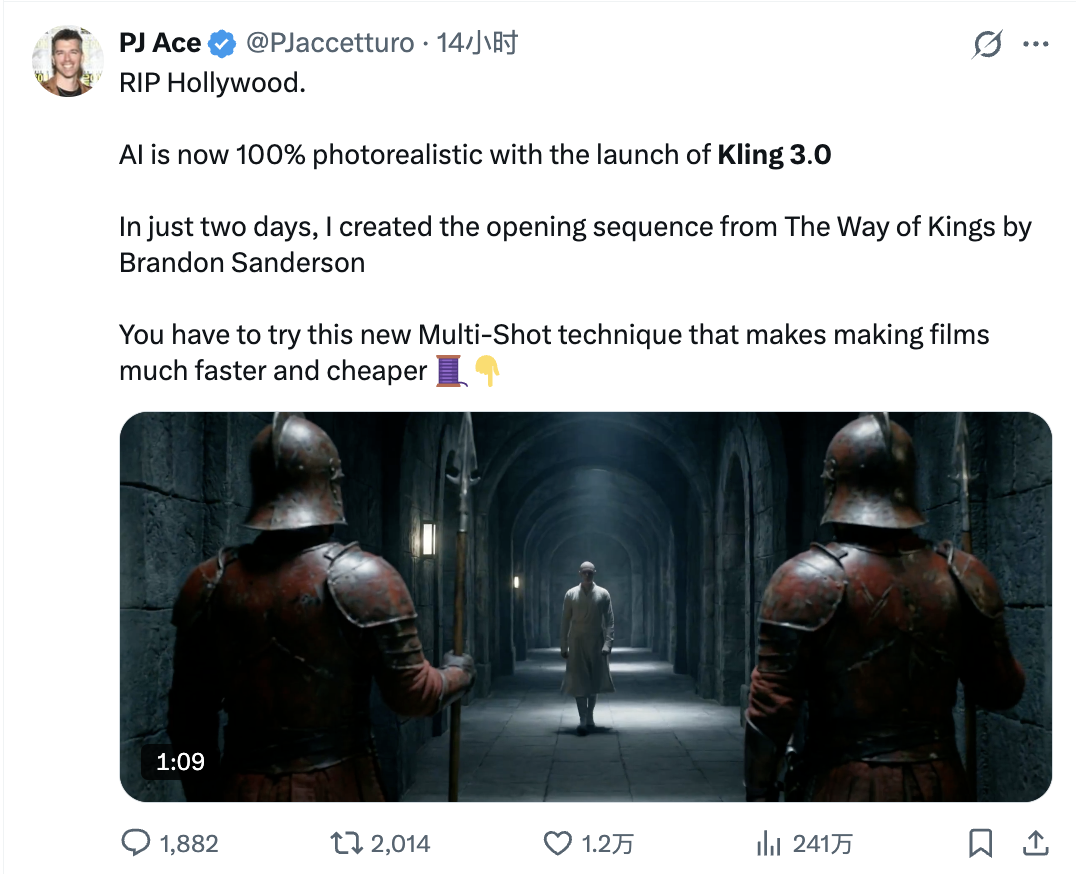
In the first week of February 2026, two Chinese video generation labs shipped their biggest releases simultaneously. Kuaishou's Kling AI launched Kling 3.0 on February 7. Two days later, ByteDance's Jimeng AI shipped Seedance 2.0. The timing was not a coincidence.
Both labs had been racing since mid-2025. But by February 2026 the race had bifurcated: Kling won on revenue and global distribution, Seedance won on raw technical capability. Understanding which victory matters more depends entirely on what you're building.
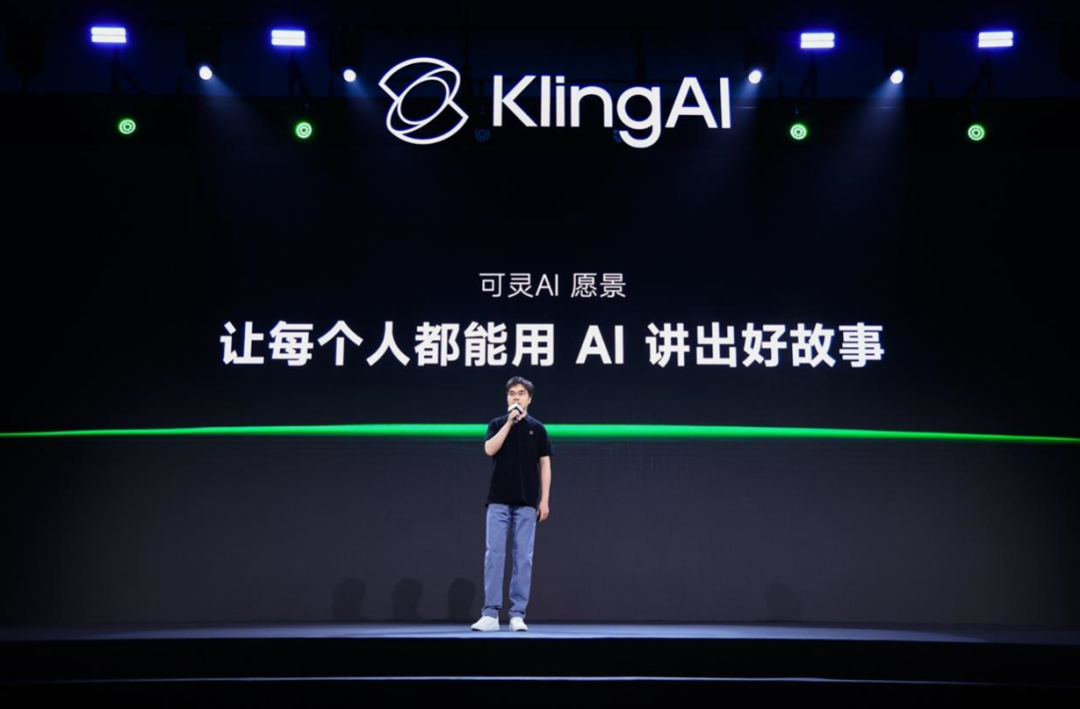
Kling: The Business Case Is Already Proven
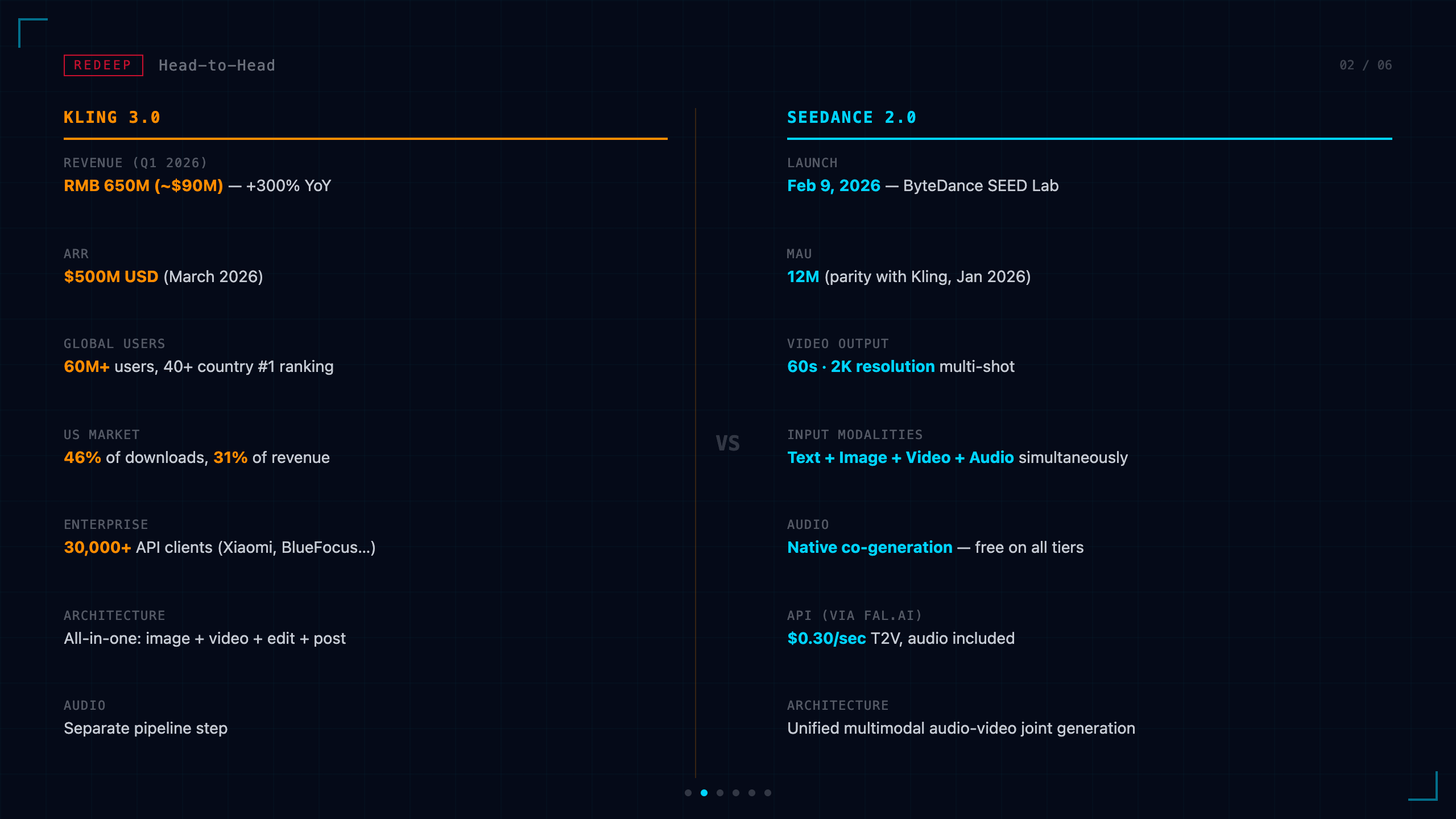
Kling's numbers from Kuaishou's Q1 2026 earnings call are striking. Kling AI generated RMB 650 million (~$90M) in Q1 2026 alone, up more than 300% year-over-year. The annualized revenue run rate as of March 2026 is approximately $500 million USD — making it the fastest-monetizing AI video product globally.
The user metrics back the revenue story:
- 60 million global users by end of 2025
- 12 million monthly active users as of January 2026 (parity with Jimeng/Seedance)
- 350% month-over-month growth in paid users from December 2025 to January 2026
- 12% free-to-paid conversion rate — high for a consumer AI tool
- Top-1 download chart in 40+ countries in early 2026
- 46.1% of global downloads from the US market; US contributes 31% of revenue
By end-2025 Kling had connected with 30,000+ enterprise clients and developers via API, and accumulated over 600 million generated videos as training data. That flywheel — more usage → more data → better model → more usage — is the strategic moat Kuaishou is building.
Kling 3.0 is positioned as an all-in-one production tool: image generation, video generation, video editing, and post-processing in a single model. The commercial model is classic SaaS: three consumer subscription tiers plus enterprise API contracts. Kuaishou has signed deals with Xiaomi, BlueFocus, and thousands of other enterprise clients.
Seedance 2.0: The Technical Case Is Hard to Argue With
Where Kling 3.0 is a product release, Seedance 2.0 is an architecture release. The SEED Lab team rebuilt the input layer from scratch.
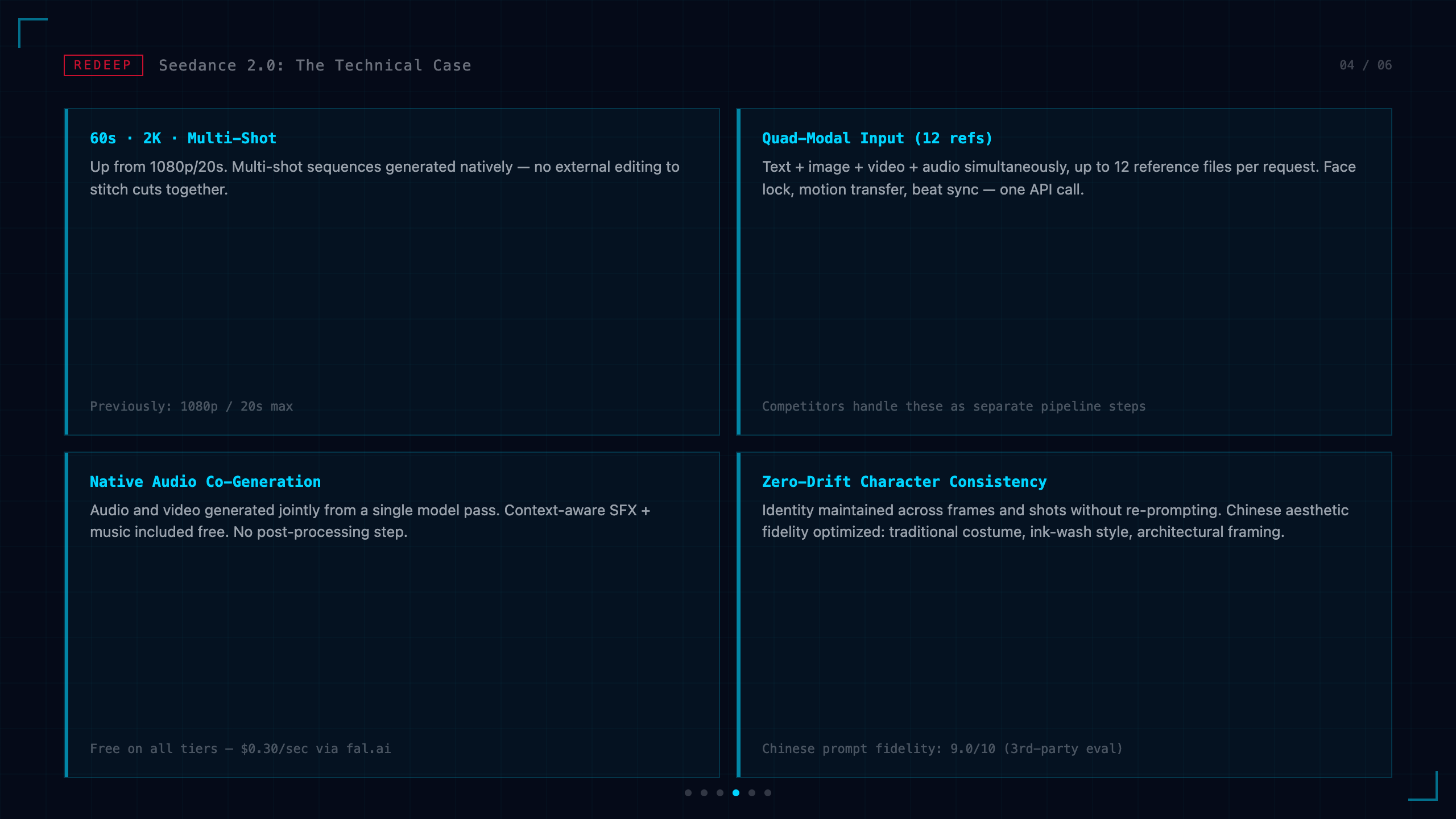
The headline spec: 60-second 2K resolution multi-shot video, up from the previous 1080p/20-second limit. But the more interesting changes are architectural:
Multimodal input at the model level. Seedance 2.0 accepts text, image, video, and audio simultaneously — up to 12 reference files per request. You can feed a face photo, a motion reference video, and a music track in a single call and get a coherent output that honors all three. Competing models handle these as separate pipeline steps.
Native audio-visual co-generation. Most video models treat audio as a post-processing step (Runway, Kling). Seedance 2.0 generates audio and video jointly from a single model pass. Context-aware sound effects and music are included at no extra cost on every API tier.
Zero-drift character consistency. The model maintains character identity across frames and shots without requiring explicit re-prompting. This matters enormously for short drama and serial content production.
Chinese aesthetic fidelity. Seedance 2.0 was specifically optimized for Chinese aesthetic references: traditional costume detail, ink-wash visual style, Chinese architectural framing. This sounds like a niche feature but it's a significant unlock for the domestic short drama market — the highest-volume commercial use case for AI video in China.
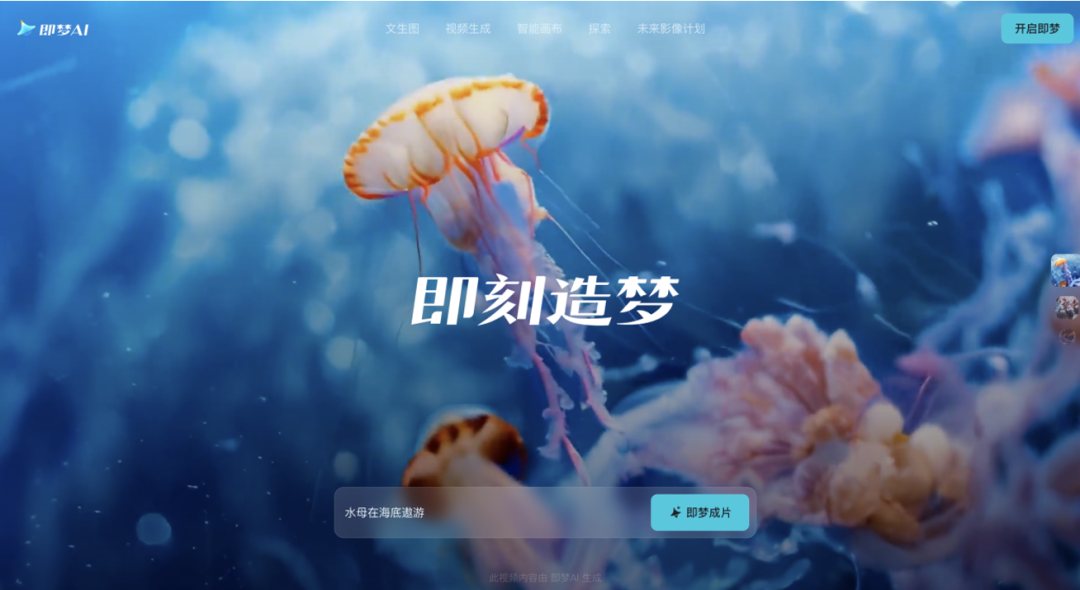
TechCrunch called Seedance 2.0 "China's strongest challenger to Sora" in their February coverage. ByteDance's own SeedVideoBench-2.0 evaluation shows Seedance 2.0 leading Sora 2 Pro, Veo 3.1, and Kling 3.0 across motion quality, audio-visual sync, and aesthetic dimensions (though self-published benchmarks should be treated with appropriate skepticism).
The Platform Flywheel: Where China Differs From the West
The most underappreciated aspect of this competition is neither Kling's revenue nor Seedance's architecture — it's the content ecosystem each lab is embedded in.
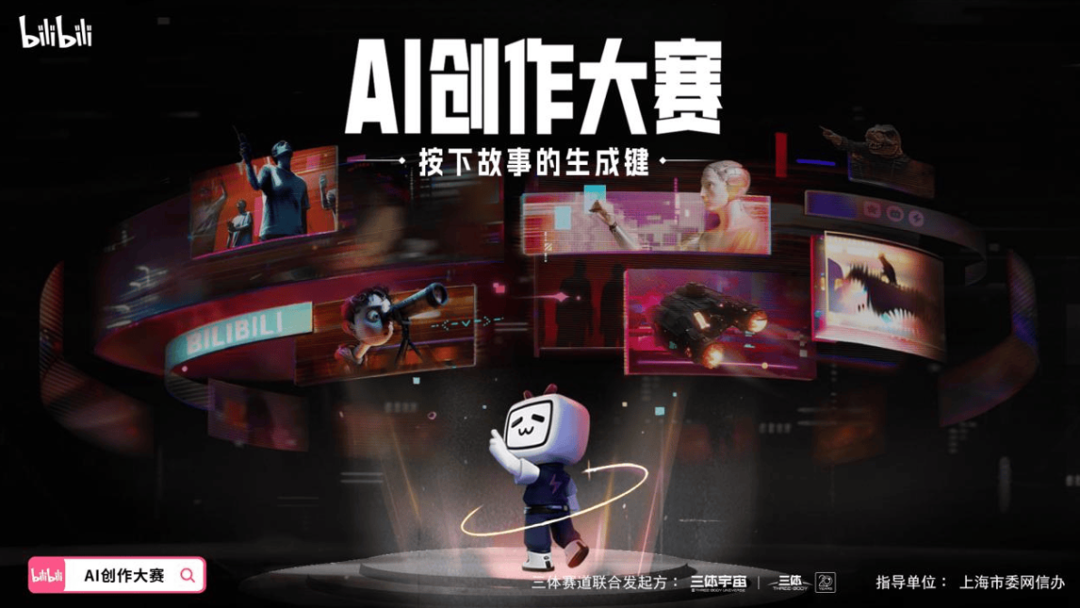
B站 (Bilibili) launched China's first major AI content creation competition in early 2026 with a ¥3M+ prize pool. For the first time they opened San Ti (The Three-Body Problem) adaptation rights to AI creators. Over 12,000 entries were submitted, with 90%+ being AI-generated video. Cumulative AI-labeled video views on Bilibili exceeded 8 billion by January 2026, with 3.5 million new AI videos added monthly — up 280% year-over-year. Over 1.2 million UP hosts are now creating AI content.
Kuaishou launched "AI Lingenjing Plan" (AI灵境计划) in November 2025: ¥10M cash + ¥100M in traffic distribution to support AIGC creators at every stage of their growth. Any AI tool counts, but Kling is the primary beneficiary. Since launch: 2.8 million new AI videos per month on Kuaishou, with 45% of Kling users discovering it through this program. Kuaishou has accumulated 210 million AI videos total on-platform — training data that directly feeds back into model improvement.

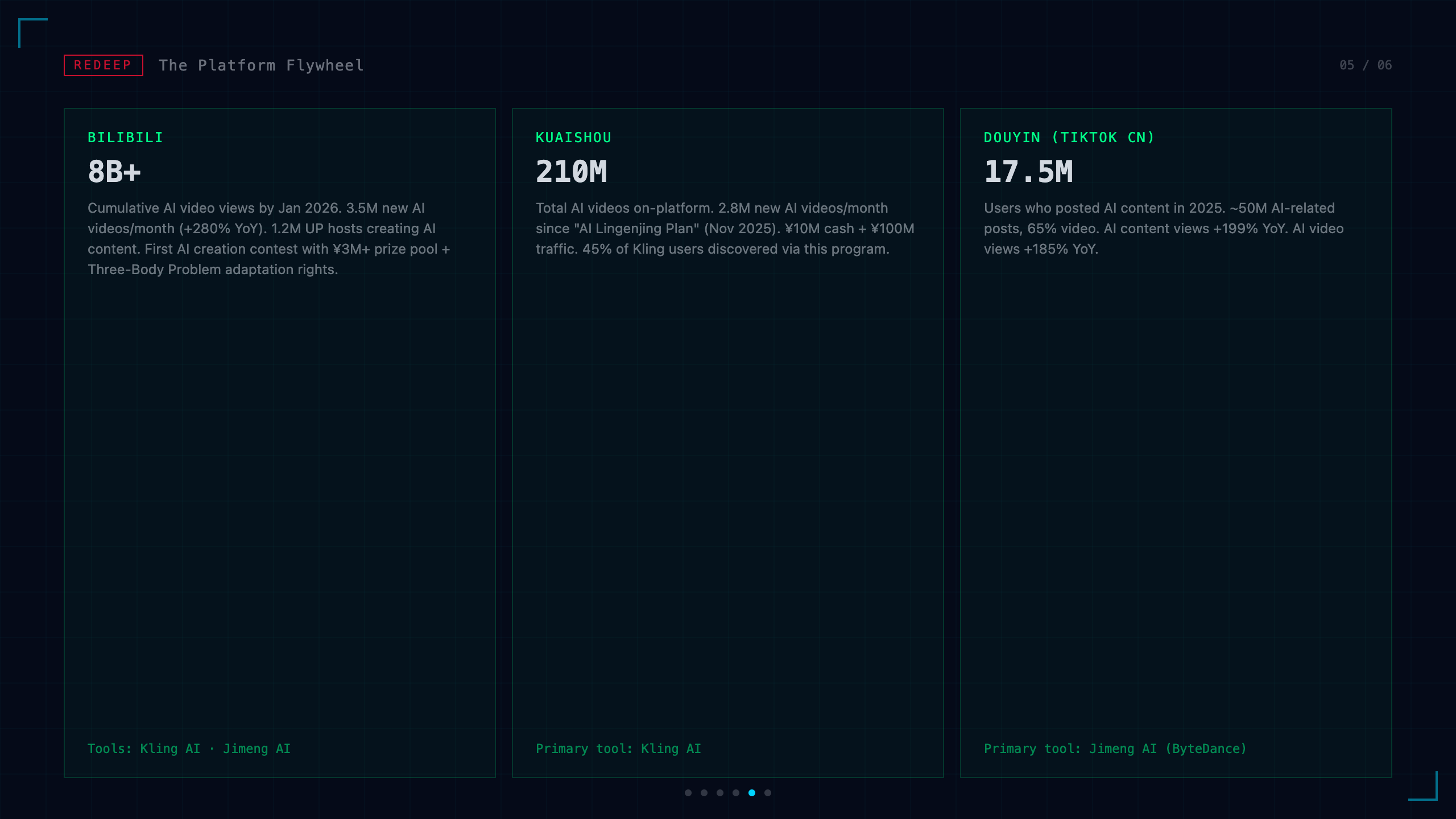
Douyin (TikTok China) reported that in 2025, 17.48 million users posted nearly 50 million AI-related posts, with AI video at 65% of that volume. AI content views grew 199% year-over-year.
This is the structural difference from Western AI video competition: in China, the tools and the distribution platforms are either the same company (ByteDance/Seedance/Douyin) or deeply integrated (Kuaishou/Kling). Every generated video is simultaneously a product and a training data point.
What It Means for Developers
If you're building for Chinese market distribution: The Jimeng/Seedance ecosystem is the obvious choice. Deep Douyin integration, Chinese aesthetic optimization, and the best Chinese-language prompt-to-video fidelity (9.0/10 in third-party evaluations) make it the default for any short drama or domestic social content pipeline.
If you're building a global product: Kling's track record is cleaner. The API is more mature, the enterprise onboarding is documented, and the 30,000+ existing developer integrations mean there's more community tooling. The US market accounting for 46% of downloads and 31% of revenue signals that Kling's international infrastructure is real, not aspirational.
If you need the best technical floor: Seedance 2.0's multimodal input architecture and native audio are meaningfully ahead. The 60-second 2K capability and character consistency make it the better choice for production-grade short drama pipelines where quality is the constraint, not cost.
On pricing: Both are cost-competitive versus Western alternatives. Seedance 2.0 via fal.ai runs $0.30/sec with audio included. Kling 3.0 consumer tiers start at roughly comparable rates. Neither will be your cost bottleneck at typical production volumes.
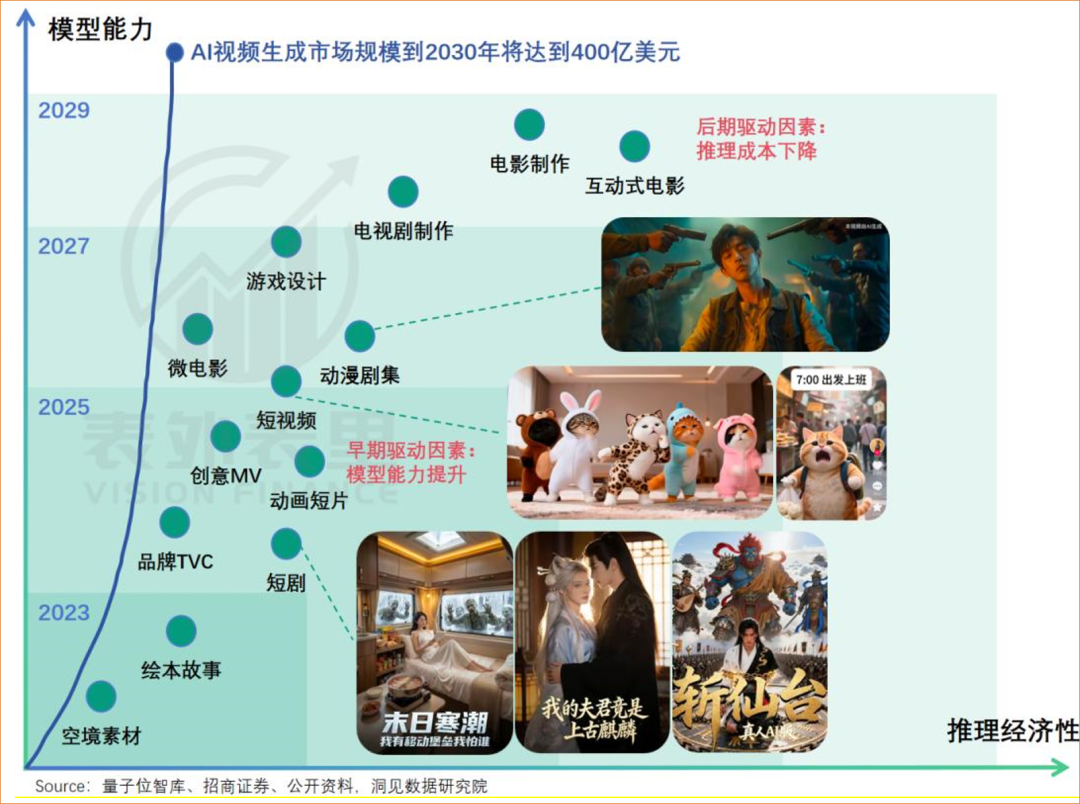
The AI video market is projected to reach $40 billion by 2030 across film, advertising, education, and gaming verticals. Both labs are building for that ceiling, not the current floor.
Bottom Line
Kling won the first phase of China's AI video war: revenue, distribution, and enterprise adoption. Seedance won the technical round: architecture, multimodal depth, and benchmark performance.
The harder question is which advantage compounds faster. Kling's $500M ARR buys a lot of GPU time and engineering talent. Seedance's architectural lead means every new use case — multi-shot production, audio-sync content, character-consistent drama — starts from a higher floor.
For builders, the practical answer is: pick the one whose strengths match your bottleneck. If you're constrained by distribution and enterprise credibility, Kling. If you're constrained by technical capability, Seedance.
The more interesting call is in 12 months, when Kling's revenue advantage has funded more R&D and Seedance's architecture has had time to mature into a product.
Resources
- Kling AI — global product, API access
- Kling API docs — developer documentation
- Jimeng AI (即梦) — Seedance 2.0 consumer interface
- Seedance 2.0 via fal.ai — Seedance API for developers
- ByteDance SEED Lab — technical details and benchmarks
- Kuaishou Q1 2026 earnings — Kling revenue data
Kling AI is accessible globally at klingai.com. Seedance 2.0 is available via API at fal.ai starting at $0.30/sec with audio included.