ByteDance's Seed team released SeedTTS 2, the successor to their 2024 speech synthesis system that first demonstrated near-human naturalness in Chinese TTS. Where the original SeedTTS proved that diffusion-based speech models could sound natural, SeedTTS 2 makes it production-ready: faster inference, better zero-shot cloning, and explicit emotion control. It's ByteDance's answer to MiniMax Speech 2.8 and ElevenLabs in the increasingly competitive TTS API market.
The release completes ByteDance's "generate anything" stack on Volcengine: Seed 3.0 for text, Seedream for images, Seedance for video, and now SeedTTS 2 for speech. For developers building multimodal applications, the pitch is simple — one platform for every modality, and the speech layer no longer feels like an afterthought.
Architecture: Diffusion Meets Language Modeling
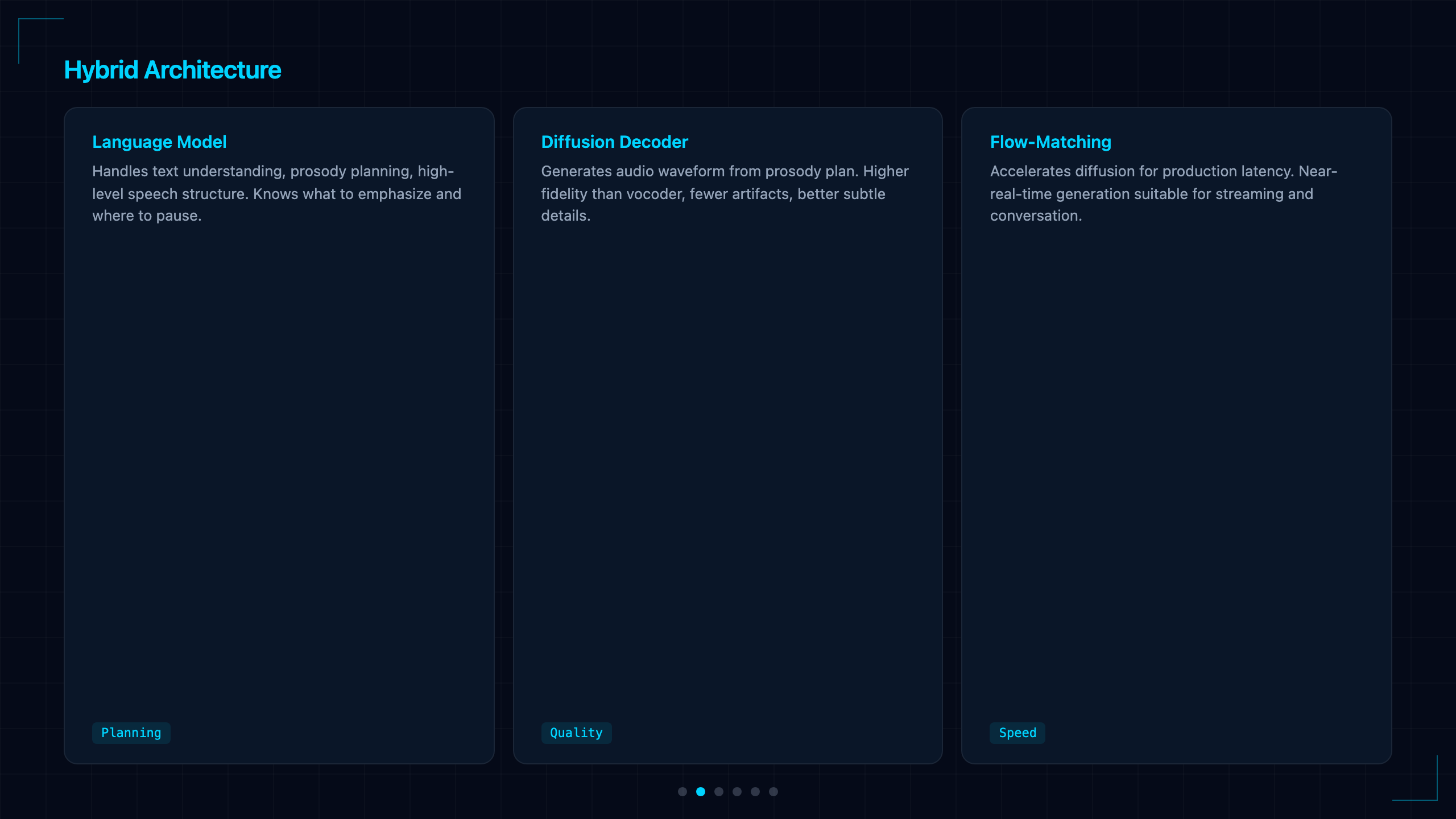
SeedTTS 2 uses a hybrid architecture combining:
Language model backbone — handles text understanding, prosody planning, and high-level speech structure. This component understands what should be emphasized, where pauses belong, and how emotions map to acoustic features.
Diffusion decoder — generates the actual audio waveform from the language model's prosody plan. Diffusion produces higher-fidelity audio than vocoder-based approaches, with fewer artifacts and better handling of subtle acoustic details.
Flow-matching inference — accelerates the diffusion process for production-viable latency. SeedTTS 2 generates speech in near-real-time, making it suitable for streaming applications and conversational AI.
This hybrid approach gives SeedTTS 2 the planning intelligence of language models (understand context, control emphasis) with the audio quality of diffusion (natural timbre, zero metallic artifacts).
Key Capabilities
Zero-Shot Voice Cloning
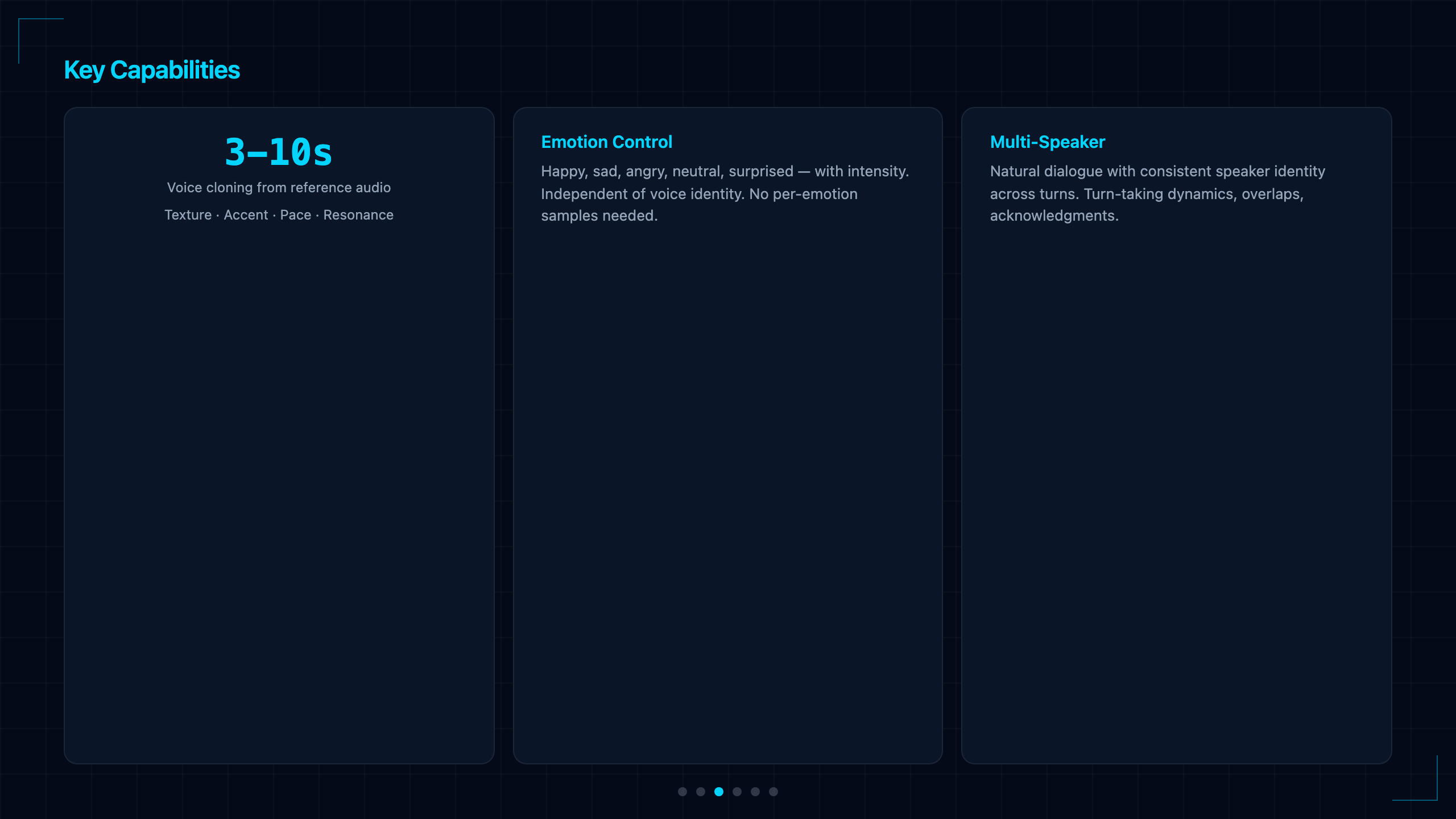
Given a short reference audio sample (as little as 3-10 seconds), SeedTTS 2 captures the speaker's vocal identity — timbre, accent, speaking pace, and characteristic patterns. The cloned voice then synthesizes arbitrary text while maintaining the captured identity.
Quality improvements over SeedTTS 1:
- Better preservation of speaker-specific breathiness and resonance
- Improved accent and dialect fidelity (critical for Chinese regional varieties)
- More stable identity across long generations (less drift over time)
Emotion and Style Control
SeedTTS 2 separates content from delivery style. You can specify:
- Emotion — happy, sad, angry, neutral, surprised, with intensity control
- Speaking rate — from measured narration to rapid dialogue
- Emphasis — mark specific words or phrases for stress
This control operates independently of voice identity — you can clone a speaker's voice and generate them speaking happily or angrily without needing reference audio for each emotion.
Multi-Speaker Dialogue
For audiobook, podcast, and game dialogue use cases, SeedTTS 2 generates natural multi-speaker conversations. Each speaker maintains consistent identity across turns, with appropriate turn-taking dynamics (slight overlaps, response timing, acknowledgment sounds).
Competition: SeedTTS 2 vs. MiniMax Speech 2.8
The Chinese TTS market now has two frontier contenders:
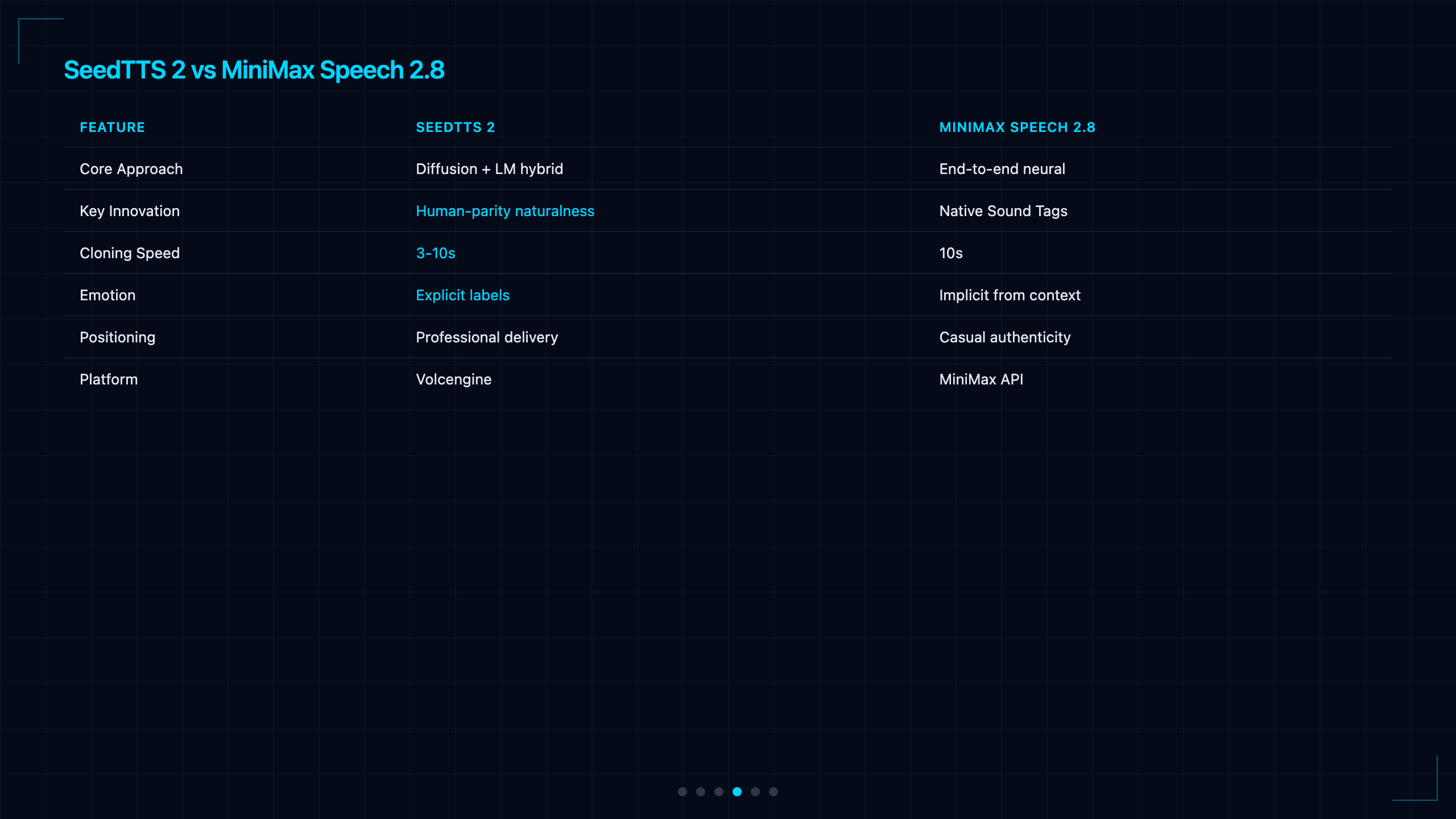
| Feature | SeedTTS 2 | MiniMax Speech 2.8 |
|---|---|---|
| Core approach | Diffusion + LM hybrid | End-to-end neural |
| Key innovation | Human-parity naturalness | Native Sound Tags (um, breath) |
| Cloning speed | 3-10s reference | 10s reference |
| Emotion control | Explicit labels | Implicit from context |
| Unique strength | Chinese dialect fidelity | Intentional imperfection modeling |
| Platform | Volcengine | MiniMax API |
MiniMax Speech 2.8 leads on "making AI sound casual" (sound tags, fillers, imperfect delivery). SeedTTS 2 leads on "making AI sound professional" (clean, natural, emotionally controlled delivery). Different positioning for different use cases.
What It Means for Developers
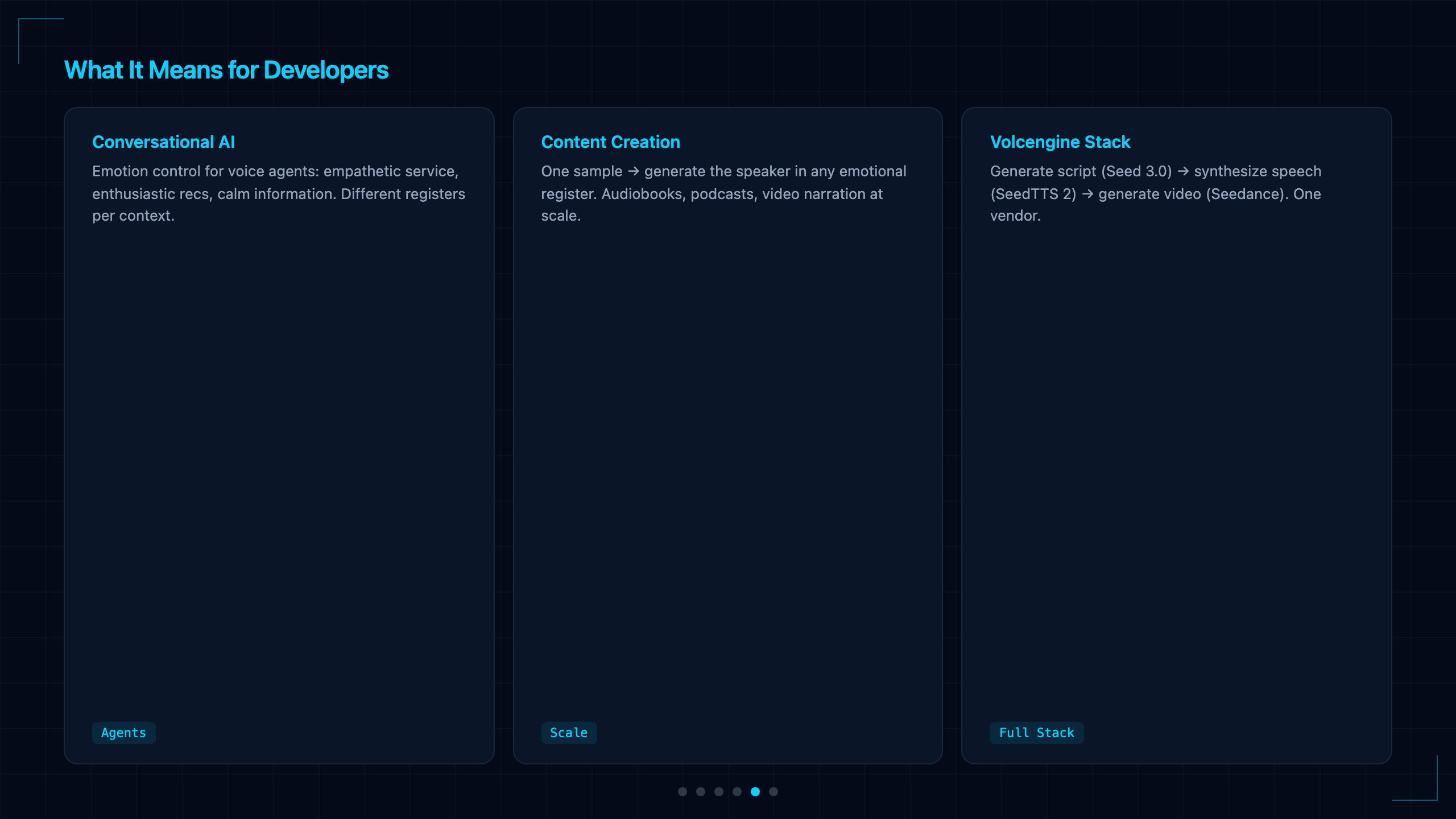
For conversational AI: SeedTTS 2's emotion control and multi-speaker capabilities make it suitable for voice agents that need to convey different emotional states (empathetic customer service, enthusiastic recommendations, calm informational responses).
For content creation: Zero-shot cloning + emotion control means: record one sample, then generate the speaker reading anything in any emotional register. Audiobooks, podcasts, and video narration at scale.
For the Volcengine ecosystem: If you're already using Seed 3.0 for LLM and Seedance for video, SeedTTS 2 completes the pipeline. Generate a script → synthesize speech → generate matching video. One vendor, one API.
Pricing advantage: ByteDance's infrastructure scale means competitive pricing relative to ElevenLabs and similar Western TTS APIs. High-volume production use cases see significant cost savings.
Bottom Line
SeedTTS 2 achieves human-parity naturalness in both English and Chinese while adding the production features (emotion control, fast cloning, multi-speaker) that make TTS useful for real applications. It's ByteDance's voice layer for the Volcengine platform — technically competitive with MiniMax Speech 2.8 but positioned differently (professional quality vs. casual authenticity). For developers in ByteDance's ecosystem, it's the obvious speech solution. For those evaluating TTS APIs independently, compare on your specific use case: SeedTTS 2 for controlled, professional delivery; MiniMax for casual, human-feeling conversation.
Resources
- SeedTTS 2 Blog — official announcement
- Volcengine AI — enterprise API access
- ByteDance Seed Speech Team — research direction
- Doubao App — consumer voice features
SeedTTS 2 is available via Volcengine API. Consumer access through Doubao's voice features.